LNG Shipping
Beyond the Render: The Engineering Behind Next-Generation LNG Carriers
Forward accommodation, wind assistance and hybrid-electric machinery are reshaping LNG carrier concepts. An engineering analysis of integration, BOG management and the evidence behind the designs.
Overview
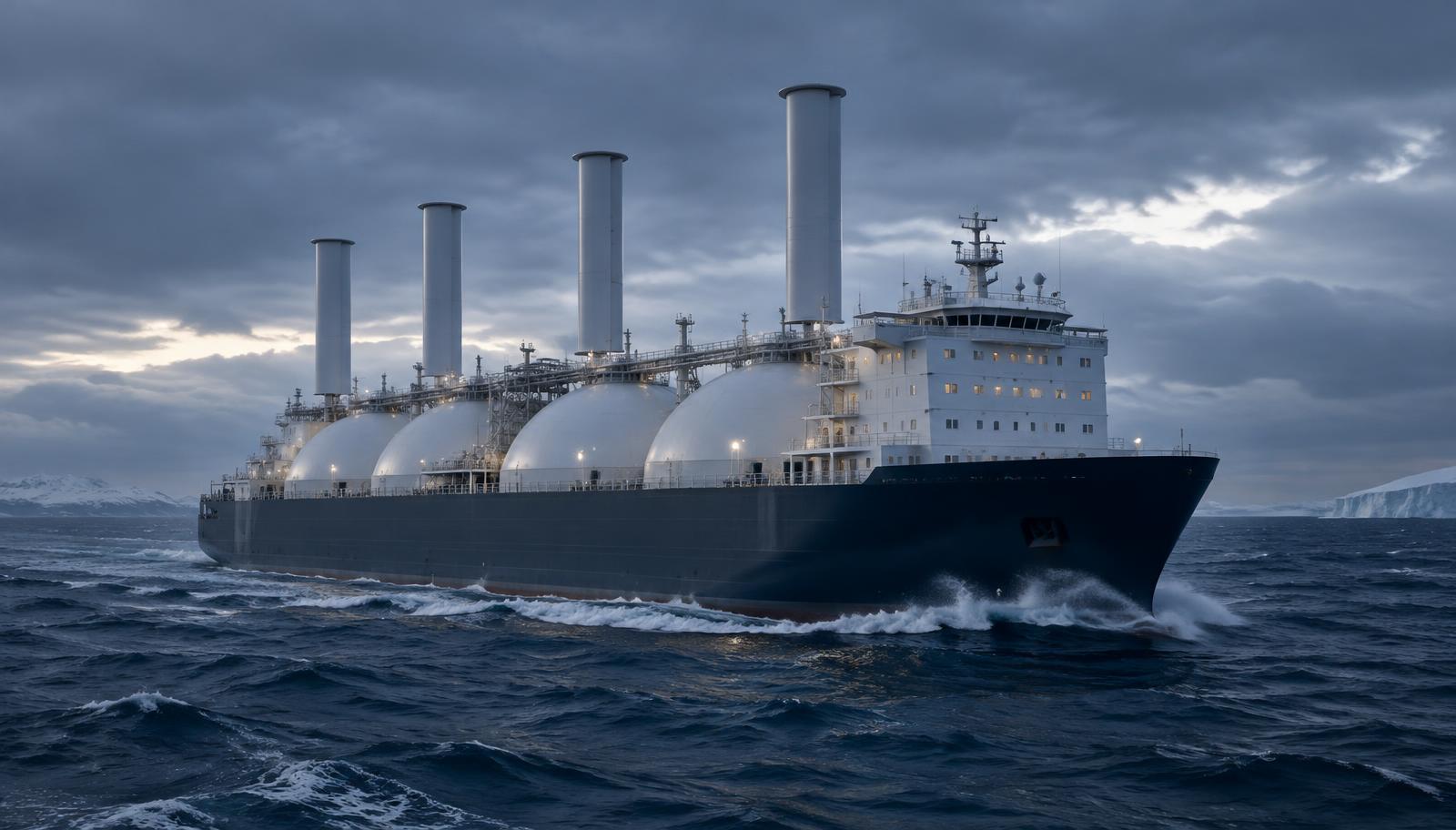
Header image: an existing illustrative LNG shipping image, not a rendering of the specific future-vessel concepts discussed below. Original concept material is linked in the Sources section.
Forward accommodation. Wind-assisted propulsion. Larger cargo capacity. Hybrid-electric machinery. New containment systems.
These ideas are reshaping the discussion about LNG carrier design. A recent LNG School concept video brings several of them together in a visually compelling vessel arrangement. But a rendering is the beginning of an engineering conversation—not evidence that every feature belongs to one approved, ordered or operating ship.
For LNG professionals, the useful question is not simply what the next generation will look like. It is how the systems will work together throughout a voyage.
Three developments—not one specification
Several documented projects show why precision matters.
In September 2025, DNV awarded Approval in Principle to HD Hyundai Heavy Industries’ gas-carrier concepts combining forward accommodation with wind-assisted propulsion. The LNG carrier concept was a 174,000 m³ design with four tiltable Norsepower rotor sails. DNV identifies navigational visibility and the integration of wind-assistance equipment among the reasons for the arrangement. [1]
In September 2026, Lloyd’s Register announced Design Appraisal for a separate HD HHI fore-accommodation LNG carrier concept using MOL’s Wind Challenger hard-sail system. Its assessment addressed visibility, stability, sail-induced structural stresses and integrated emergency shutdown arrangements. Rotor sails and hard sails are different technologies, even when both influence the vessel’s layout. [2]
A third development was announced on 13 October 2026: LR, Shell and GTT launched a joint development project for a conceptual 200,000 m³ LNG carrier combining hybrid-electric propulsion with NEXT1 containment. The programme includes propulsion architecture, redundancy, battery integration and commercial evaluation. [3]
These examples establish real development activity. They do not establish that the LNG School video represents any particular one of these projects. The exact design identity and the functions of its additional deck tanks remain unconfirmed in this review.
A layout change becomes a whole-ship decision
Moving the bridge and accommodation forward can make more deck space available for wind-assisted propulsion equipment. The LR project describes the resulting flexibility for sail placement. [2]
OSSA LNG engineering perspective: That arrangement should be evaluated through the work it enables and the constraints it introduces. A shipboard review should consider access between accommodation and machinery spaces, communications, emergency routes, maintenance logistics and the practical organisation of watches and inspections.
These are questions for the actual design, not objections to innovation. A clean-looking deck arrangement is valuable only when the people operating it can work safely and effectively.
Wind assistance changes the gas balance
OSSA LNG engineering analysis: Consider a voyage condition in which wind assistance reduces the propulsion power required to maintain speed. The next question is what happens to gas demand.
For a ship using cargo vapour as fuel, the review should establish how gas generation and consumption remain balanced. Which consumers are available? What recovery capacity exists? How does the system respond during waiting, manoeuvring or low-load operation? What happens when equipment is unavailable?
This is not a prediction that wind assistance necessarily increases gas combustion or creates a BOG problem. It is a reminder that a propulsion saving and a whole-ship saving are not automatically the same result.
DNV’s published LNG-carrier decarbonisation study evaluates wind assistance alongside machinery, reliquefaction, shore power and other options using defined routes and operating profiles. Its estimates belong to those scenarios, not to every LNG carrier fitted with rotors. [4]
The engineering task is to compare complete operating cases rather than add individual technology savings together.
Larger capacity still needs terminal access
Larger LNG carriers are another part of the discussion, but cargo volume does not settle commercial suitability.
LR’s September 2026 study assessed representative 200,000 m³ concepts against existing terminal infrastructure. It reported compatibility with 88 terminals, compared with 97 for a conventional 174,000 m³ vessel. Beam, draft and displacement were important compatibility considerations. These findings concern the assessed concepts; they are not blanket clearance for any ship of that capacity. [5]
OSSA LNG operational perspective: The relevant question is which vessel can serve the intended terminal network reliably. Berthing arrangements, loading-arm interfaces, manoeuvring requirements and operating restrictions belong in that assessment. Capacity is only one input.
Solar panels and extra tanks need evidence, too
The LNG School narration also refers to solar panels and additional tanks. In this review, no primary technical document was identified confirming the panels’ hazardous-area suitability or the tanks’ intended contents for the exact concept shown.
Those features should therefore remain attributed to the video, not converted into verified specifications. Nor should an alternative explanation suggested in a comment become a confirmed design fact.
The appropriate next evidence would be the designer’s general arrangement, equipment descriptions and the stated scope of any class review. Without that, an attractive image cannot establish equipment certification, storage duties or operational capability.
Approval milestones are not sea-trial results
AiP, Design Appraisal, a development agreement, a shipbuilding order and demonstrated operating performance represent different stages.
DNV describes AiP as a concept evaluation against a predefined framework. The LR Wind Challenger announcement identifies a specific design appraisal scope. Neither statement should be rewritten as proof that a vessel has entered service or achieved a particular fuel saving at sea. [1,2]
OSSA LNG conclusion: Progress deserves attention without being overstated. The strongest account of a new design explains what has been assessed, what remains under development and what still needs operating evidence.
The future LNG carrier will not be defined by the number of technologies visible on deck. It will be defined by the quality of their integration—and by whether that integration supports reliable, maintainable operation with a competent crew.
Which interface would you examine first: wind assistance and BOG management, electrical redundancy, terminal compatibility, or crew access and maintenance?
Sources
1. DNV, 12 September 2025: DNV awards AiP to HD HHI for innovative LNGC and VLEC designs with forward accommodation and WAPS.
2. Lloyd’s Register, 16 September 2026: Fore-accommodation LNG carrier equipped with MOL’s Wind Challenger receives LR Design Appraisal.
3. Lloyd’s Register, 13 October 2026: LR, Shell and GTT to explore hybrid-electric 200,000m³ LNG carrier concept.
4. DNV: Potential decarbonization strategies for a new LNG carrier design. Scenario study; not used as evidence of present regulatory compliance or a universal fuel-saving figure.
5. Lloyd’s Register, 23 September 2026: LR study points to 200,000m³ LNG carriers as viable next step for global LNG fleet renewal.
Inspiration: LNG School, The LNG Details | Episode 03: The Next-Generation LNG Carrier. The conclusions here are OSSA LNG’s, not attributed to the video’s author.
Stay ahead of the LNG curve
Get new vessel profiles, technology explainers and video notes by email.
Join the newsletterTechnical information
- Status
- Educational overview — editorial review required
- Seeded educational summary awaiting editorial and technical review.
- Last reviewed
- 17 October 2026
- Source status
- https://www.dnv.com/news/2025/dnv-awards-aip-to-hd-hhi-for-innovative-lngc-and-vlec-designs-with-forward-accommodation-and-waps/
- https://www.lr.org/en/knowledge/press-room/press-listing/press-release/2026/worlds-first-fore-accommodation-lng-carrier-equipped-with-mols-wind-challenger-receives-lr-design-appraisal/
- https://www.lr.org/en/knowledge/press-room/press-listing/press-release/2026/lloyds-register-shell-and-gtt-to-explore-hybrid-electric-200000m-lng-carrier-concept/
- https://www.dnv.com/expert-story/maritime-impact/Potential-decarbonization-strategies-for-a-new-LNG-carrier-design/
- https://www.lr.org/en/knowledge/press-room/press-listing/press-release/2026/lr-study-points-to-200000m-lng-carriers-as-viable-next-step-for-global-lng-fleet-renewal/
- https://lnkd.in/p/dATHZts5
Technical parameters are indicative and may vary by vessel design, generation, shipyard, operator and intended service.