OSSA LNG

Daily News

16 October 2026

Global LNG, Energy, Shipping & Technology Intelligence

Edition · 16 October 2026

Bunker procurement fragments as Europe balances flexibility and supply

Shipping fuel buyers are shortening commitments and spreading refuelling locations, while Germany's regulator distinguishes low storage from an immediate shortage. Equinor is preserving near-term pipeline supply at an emissions cost, and TotalEnergies' pre-results indicators show how price volatility is lifting LNG income.

Lead story
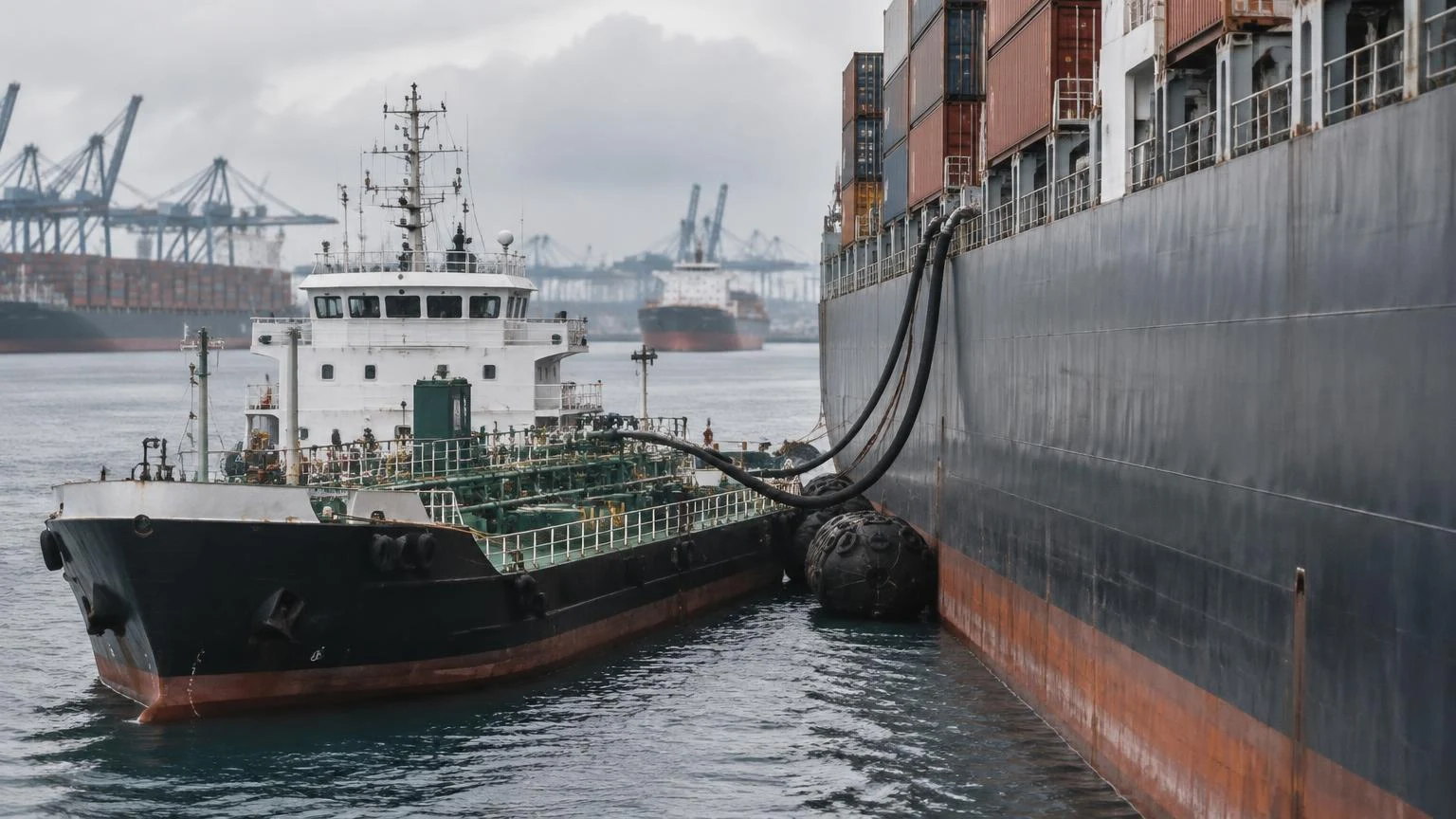
AI-generated editorial illustration · OSSA LNG · Not an actual photograph.

01 — Shipping & Transport

War-driven volatility pushes bunker buyers toward shorter contracts and more ports

Reuters reported on 16 October that marine-fuel buyers are shifting from six-to-twelve-month contracts toward quarterly, monthly and spot purchases as prices remain more than 70% above pre-war levels, according to bunker-market participants. Disruption at Fujairah has also redirected some demand toward Port Louis, Colombo and Salalah; Vitol began supplying bunkers at Gwadar in July.

Why it matters

MyLNG analysis: the operational change is broader than a price spike. Shorter commitments and a wider port network reduce dependence on one supply hub, but they also increase tender frequency, counterparty screening, fuel-quality exposure and voyage-planning complexity. A durable de-escalation and normalised availability at Fujairah would weaken this shift.

Impact

Near-term bunker procurement is likely to remain more spot-driven and geographically diversified, with added administrative and voyage-planning costs.

  • bunker procurement
  • route resilience
  • fuel volatility

02 — Energy

Germany says low storage does not yet equal a supply-security crisis

Germany's network regulator said on 15 October that gas storage was 60.4% full, or 149.34 TWh, but supplies were stable and there was no current security risk. The regulator attributed slower injections to commercial trading and hedging decisions rather than a physical inability to refill. This is a material update to the broader European storage concern reported on 13 October: the new evidence is a Germany-specific regulator assessment.

Why it matters & sources

Why it matters

MyLNG analysis: storage is an important buffer, not a complete security metric. Pipeline flows, LNG access, demand response and procurement positions can keep the system physically balanced even with lower inventories. The distinction matters for LNG because Germany may remain highly exposed to marginal cargo prices without being short of gas; severe cold or a prolonged Gulf disruption would change that balance.

03 — Energy

Equinor protects 2.3 bcm of European gas by dropping a Troll C compressor project

The Troll partnership will complete its electrification programme without a second electric export compressor on Troll C. Equinor said the installation would have reduced production for up to 21 months; cancelling it is expected to make about 2.3 billion standard cubic metres of gas available to Europe across 2027 and 2028. The trade-off is lower emissions abatement: completed measures deliver about 330,000 tonnes of annual CO2 reductions, roughly 75% of the original plan.

Why it matters & sources

Why it matters

MyLNG analysis: this is avoided future production loss, not an immediate output increase. The extra Norwegian pipeline gas could reduce Europe's marginal call on LNG in 2027-28, but the decision also keeps more gas-driven compression in service. The strongest alternative view is that a short modification outage could have bought longer-term emissions savings; Equinor instead prioritised supply and asset value because Troll is already producing at maximum capacity.

04 — LNG & Energy Markets

TotalEnergies flags stronger LNG income before full third-quarter results

TotalEnergies said in pre-results indicators that third-quarter integrated LNG income should rise sharply, with its average LNG selling price about 20% higher quarter on quarter and the European benchmark gas price about 40% higher. The company is due to publish full results on 29 October, so these indicators are directional rather than a complete or audited quarterly result.

Why it matters & sources

Why it matters

MyLNG analysis: the update shows how a diversified LNG portfolio and trading operation can monetise sudden regional price spreads. It does not demonstrate higher physical volumes, nor should it be read as a sector-wide earnings forecast: contract mix, hedging and cargo flexibility differ materially across sellers.

LNG Technology & Innovation

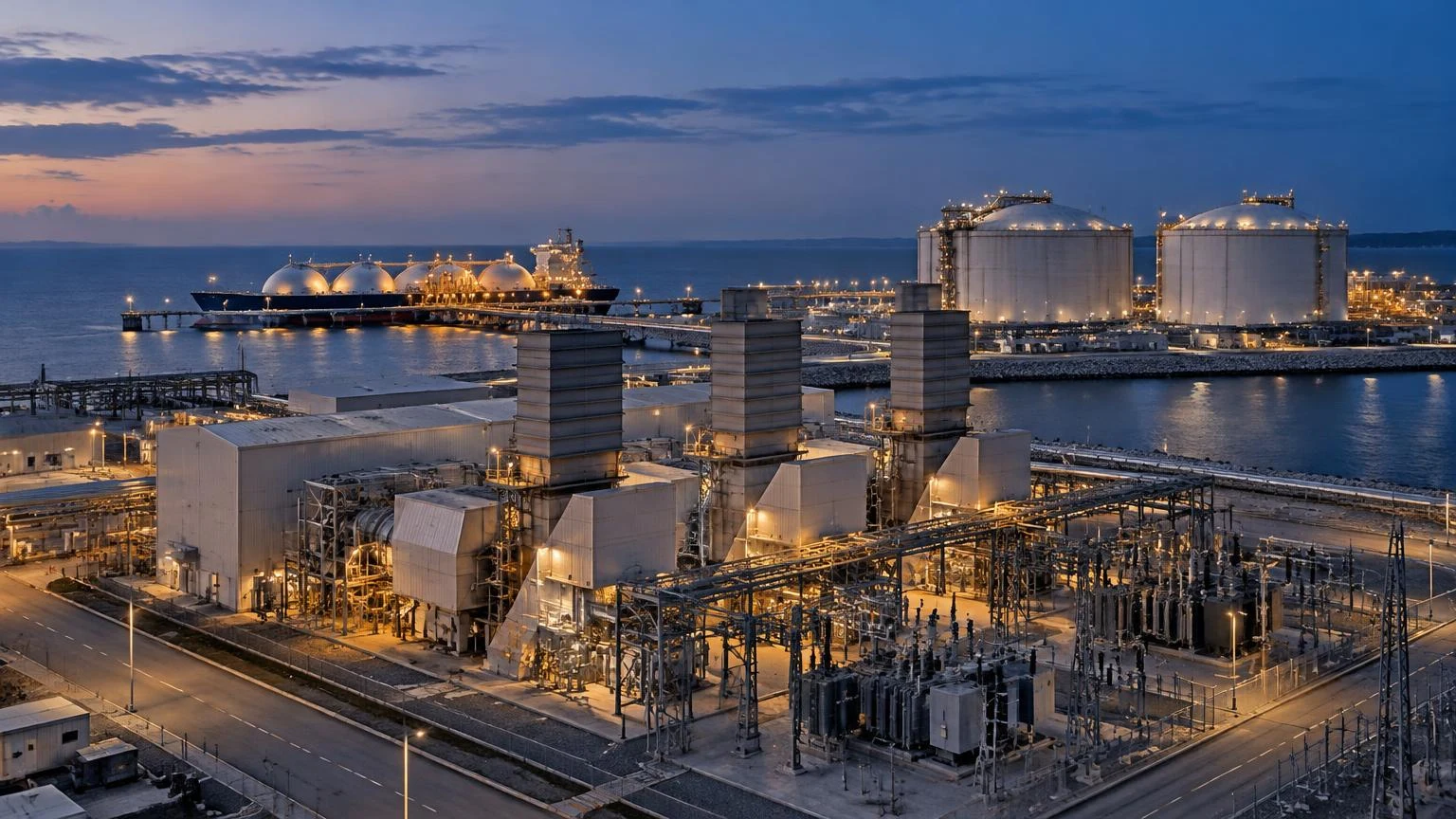
AI-generated editorial illustration · OSSA LNG · Not an actual photograph.

06 — Tech insight · LNG Infrastructure

Island-mode power islands scale from LNG self-supply toward adjacent compute

What is new
Venture Global announced frame agreements with GE Vernova and Baker Hughes covering up to sixteen 720 MW power-island units and transformer equipment. These are procurement frameworks, not sixteen placed orders or operating plants: the company expects its first purchase order by the end of 2026, with staged deployment tied to customers and commercial conditions. Venture Global says the programme builds on six power islands, totalling about 4.5 GW, that are ordered, under construction or operating across its LNG facilities. Sources: Venture Global, “Venture Global Secures New Agreements to Support Expansion of Existing Grid-Independent Power Network,” 15 October 2026, https://ventureglobal.com/2026/10/15/venture-global-secures-new-agreements-to-support-expansion-of-existing-grid-independent-power-network/; Baker Hughes, “Baker Hughes and Venture Global Expand Strategic Long-Term Power Generation Partnership,” 15 October 2026, https://investors.bakerhughes.com/news/press-releases/news-details/2026/Baker-Hughes-and-Venture-Global-Expand-Strategic-Long-Term-Power-Generation-Partnership/default.aspx.
How it works
Each proposed 720 MW island uses combined-cycle gas turbines and associated equipment in configurations consistent with Venture Global's existing infrastructure. Gas turbines generate electricity first; their exhaust heat is recovered to raise steam for a steam turbine, increasing output from the same fuel stream. Baker Hughes says its scope also includes steam turbines, controls, electrical integration and E-houses. Operating behind the meter avoids reliance on the public grid, but the site must itself manage generation-load balance, protection, controls and maintenance resilience.
Why it matters
MyLNG analysis: island-mode generation can insulate liquefaction facilities from grid congestion and connection delays, but independence transfers reliability responsibility to the operator and commits capital to dedicated generation. The announced pathway to as much as 10 GW of compute capacity by end-2034 is conditional on customers, demand, permits and purchase orders; it is not evidence of installed capacity or measured efficiency. The unresolved question is whether shared infrastructure improves utilisation without competing with LNG operations for gas, maintenance resources or emissions headroom.
LNG / shipping impact
For LNG terminals, the repeatable architecture could shorten integration work for future self-generation and reduce exposure to public-grid constraints. Venture Global says any third-party compute development would be separate from existing LNG commitments, but actual effects depend on project-specific power balances, permitting, equipment deliveries and emissions controls. This is a commercial architecture already used at LNG sites; the newly announced expansion remains at framework and permitting stage.

Technology maturity

  1. concept
  2. prototype
  3. pilot
  4. demonstration
  5. commercial

Potential impact

medium