LNG Shipping
Q-Flex and Q-Max LNG Carriers: Scale, Trade Routes and Terminal Requirements
Why the largest LNG carrier segments lower unit transport cost, and where terminal and route constraints set the limit.
Two segments, one design intent
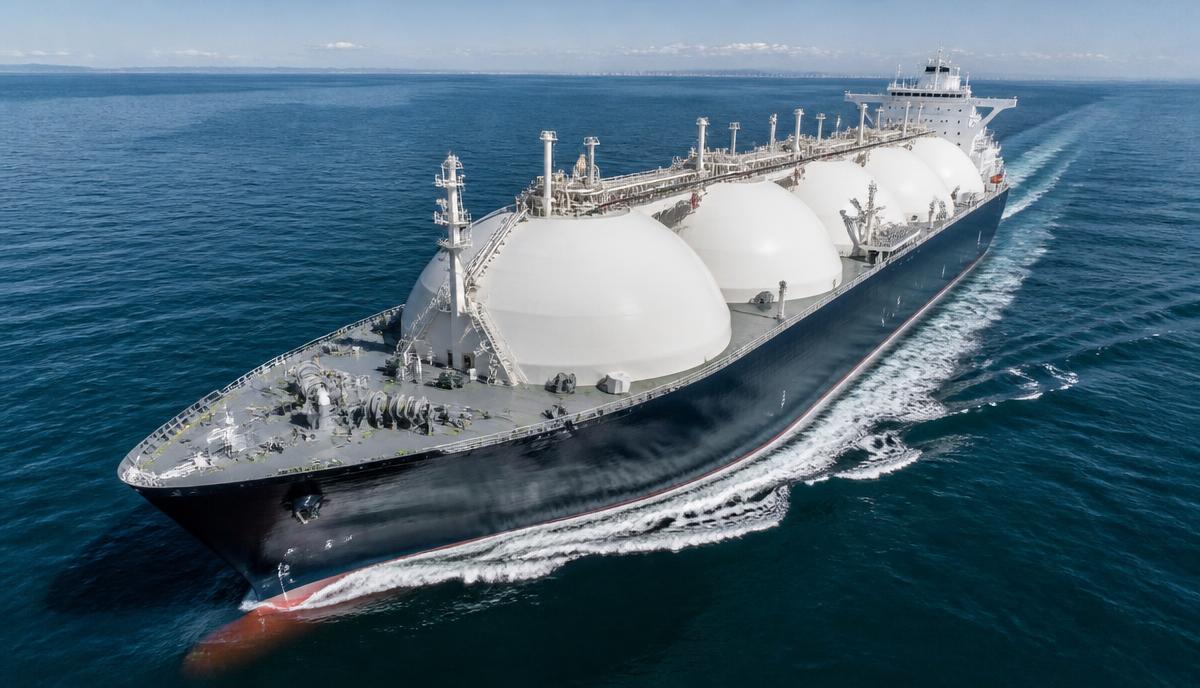
Q-Flex sits at an indicative 210,000–217,000 m³ and Q-Max at an indicative 260,000–266,000 m³. Both were developed for long-haul Qatari exports.
They are capacity segments, not containment systems: both use membrane containment, and both are ocean-going carriers by operational role.
Why scale reduces unit cost
Crewing, machinery and port time do not grow proportionally with cargo volume, so cost per unit of cargo generally falls as vessels get larger on stable long-haul routes.
The advantage depends on consistently full cargoes and a predictable trade, which is why the segments are tied to specific projects.
Where the limit sits
Draft, beam and length restrict the terminals able to receive these ships, and manoeuvring in confined water requires planning and tug support.
Terminal compatibility, not shipbuilding capability, is usually the binding constraint on the upper size band.
Related vessel profiles
Related technology
Related glossary terms
Stay ahead of the LNG curve
Get new vessel profiles, technology explainers and video notes by email.
Join the newsletterTechnical information
- Status
- Educational overview — editorial review required
- Seeded educational summary awaiting editorial and technical review.
- Last reviewed
- 15 September 2026
- Source status
- Sources pending editorial review.
Technical parameters are indicative and may vary by vessel design, generation, shipyard, operator and intended service.